Friday, December 30, 2011

Disaster Relief with EM


    EM Application at Tsunami Affected Sites in Thailand
    A day after the tsunami struck the coastal areas of southern Thailand, the manufacturer of Effective Microorganisms™ in  Thailand, EM Kyusei gathered to discuss the possible ways to provide help to the affected areas. On the same day, Dec. 29th, Lt. Gen. Chinnarat of the Thai Royal Army (retired), advisor to the Science and Technology Committee of the Parliament and strong advocate for Effective Microorganisms™, contacted Mr. Kazuhiko Wakugami telling that the military has been requested by the Chairperson of the Thai Red Cross to use Effective Microorganisms™ in the affected areas. 

    Henceforth, on the same day, 2 tons of EM1 was airlifted using the Thai Royal Air force plane to the affected area in Phang Nga Province one of the hardest struck areas. They sprayed EM dilution at the temple, where dead bodies are placed temporarily for identification. There were more that 1,000 dead bodies at the temple and Thai military is collecting the dead bodies from the disaster struck areas.

EM Kyusei knows that a more concentrated solution would have more effect. However the initial problem is bringing EM into some of the inaccessible areas. At the request of the Red Cross, EM Kyusei provided 5 tons of EM on Jan 4. EM Kyusei staff brought the EM on land and with 10 staff members who are continuing work with volunteers as of this date.

They made activated EM (AEM) there and sprayed dilution of AEM every day at a dilution of 100. Among other things, a 10 ton fire truck lorry was used as well as shoulder pack sprayers. There was a general comment among doctors, military people, and other volunteers that a 50% smell reduction was observed. There was initial protest over EM/AEM use from some forensic doctors but after observing the smell reduction, all protests had stopped.
                                          
EM Kyusei knows that a more concentrated solution would have more effect. However the initial problem is bringing EM into some of the inaccessible areas. At the request of the Red Cross, EM Kyusei provided 5 tons of EM on Jan 4. EM Kyusei staff brought the EM on land and with 10 staff members who are continuing work with volunteers as of this date. 


Around 2 AM, Phang Nga Port EM Kyusei staff and volunteers spray EM  solution to each of the latest batch of dead bodies brought in from the islands by the Navy ships before bringing them to the identification point


Tuesday, December 27, 2011

Wastewater Treatment


EM Technology® is properly applied in the collection system. Timing, flow rates, system design, and management are all considered in developing an application program for a wastewater treatment plant and collection system (sewer).

EM•1® has a unique ability to stabilize complex proteins through a shift from anaerobic putrefaction cycles to a fermentative cycle. Hair and plastics can play havoc with the balancing of an anaerobic digester by creating over-thickening of the scum layer. Hair is primarily composed of complex proteins, which have been historically difficult to stabilize to a point at which the biological breakdown will occur in a timely manner. EM•1® will assist by accelerating protein stabilization.

EM•1® is applied at various stages in the treatment process for optimum results. The application site and dosage amounts are dependent on the type of treatment system, the age of the system, and the goals of the parties involved. Application rates can vary from 1: 1000 to 1: 40,000. The average rate into a treatment system is around 1: 10,000 (based on daily flow). The EM•1® is activated and injected at various points throughout the collection system on a steady flow.

The microbes in EM•1® Waste Treatment secrete beneficial substances such as organic acids, enzymes and antioxidants (chelated minerals and vitamins) when in contact with organic matter. In wastewater applications, EM•1®  assists in shifting conditions from putrefactive to non-putrefactive. This unique ability enables EM•1® to transition the wastewater collection system into a pretreatment system, thereby lowering the loading demand on wastewater treatment plants. Essentially, consistent applications of EM Technology® into the collection system will increase the capacity of the treatment plant, decrease the operation costs, and improve the efficiency of the entire system.

Since every treatment system is in itself as a separate ecosystem, a custom-design in each application for a wastewater treatment system will be done after an assessment of the entire system.   

Sunday, December 25, 2011

Solid Waste Management


EM Technology® has been used around the world in the treatment of solid waste landfills. The motto of "acting locally" can be taken quite literally if we were all to incorporate the use of Effective Microorganisms™ at home by treating all of our food and green wastes "locally".  Solid wastes are inevitable in today's society. How we manage the wastes is really the problem, not having them. Throwing items that have some usable value is not management, but waste. Incineration of wastes leads to other problems with air pollution and also relies heavily on fuels to produce high heat for the process to work properly. Materials that go into landfills include, but are not limited to, green wastes, food wastes, metals, plastics, construction debris, etc. 

Landfills are maintained under strict regulations that require daily covers, dust control, odor control, and leachate management for air and groundwater protection. Landfill managers are concerned with these factors and compaction rates as well. Landfill gases are required to be captured as they could be explosive and are often flared because they are loaded with impurities that prevent them from being efficient energy sources. Increasing compaction rates and cleaning the gases with Effective Microorganisms™ so they can be used could save taxpayers millions of dollars per month on a national level. 

Odor and Dust control 
Using EM•1®  in the daily cover and in the water trucks that are used to control dust, odor, and increase compaction rates, are simple ways to better-manage a landfill. An added benefit is that EM•1® Waste Treatment will eliminate odor on contact, making for better neighbour relations and better working conditions for employees. Hydrogen sulfide has been implicated in breathing problems.  Eliminating H2S, as EM•1® has been proven to do in wastewater treatment, can also connect EM•1® Waste Treatment with worker safety. 

Leachate and Landfill Gases 
H2S is a contaminant to the landfill gas.  Removing it will clean the gas and make it burn more efficiently. Some landfills, depending on the amount of organic materials that are added to them, will produce varying amounts of methane gas and leachate.  Many landfill operations that aggressively separate organic matter going into the landfill will not produce a significant amount of methane, yet they are still required to install gas collection systems. As has been demonstrated with EM•1® applications in several countries, there is the possibility of eliminating the production of methane gas in the first place, eliminating the need for the expensive gas collection system.  The eventual goal is to see that large amounts of EM•1® are added to the leachate and the incoming wastes to detoxify the leachate, eliminating the worries of groundwater contamination. On this level more research needs to be done, however, based on research in other areas of waste treatment, there is a high probability of achieving these goals. 

Application Rates 
In a 5,000-gallon water truck, 100 gallons of Effective Microorganisms™ EM•1® are added to control odor and increase compaction rates. The beneficial microbes in the EM•1®  will stop pathogenic microbial growth (as has been laboratory tested) and set the growing conditions for other beneficial microbes in the landfill which will increase the decomposition of the organic matter in the landfill. At this ratio, the methanogen groups of microbes will not be able to grow and methane gas will not be produced. 

Daily cover made of organic material can be mixed with EM•1® at a rate of 1.5 gallons per ton of material. 

With operations this large, Activated EM•1® is used with the above ratios. 

Effective Microorganisms™ can be applied through bioreactors as well. The application ratio will be 1 part Activated EM•1® to 1,000 gallons of water. 


Commercial Composting


Using EM Technology® can help reduce composting turning costs by as much as 80% and prevent anaerobic, odor-causing decay. The key to efficient composting is to have healthy decomposition constantly occurring throughout the pile. In all conditions, including low oxygen and anaerobic environments, EM•1® facilitates healthy decomposition and increased production of stable organic matter particles (humus).

Feed stocks treated with EM•1® quickly develop structure and a more fluffy texture allowing oxygen to penetrate into the pile. Anaerobic pockets become aerated and the overall quality of the product is improved while reducing management time and cost. Microbial density and diversity improvements and increased nitrogen availability in composts treated with EM•1® Waste Treatment.

Composting is an environmentally conscious method of creating a valuable product out of organic wastes. At present, the fundamental challenge composting facilities face is in properly aerating the piles. Oxygen starts to become limiting in compost piles within minutes of turning and the rising diesel and equipment costs makes turning compost the main management input.  Frequent turning also exacerbates odor and dust issues, releasing ammonia and methane gases into the air and in the process losing valuable nutrients and organic mass. This makes for angry neighbors, numerous flies, and a potentially disease inducing finished product. 

EM•1® is compatible with numerous types of commercial composting systems (including in vessel systems), and can be used to effectively treat green waste, livestock waste, food waste, and most other agricultural-industrial wastes that will be composted. EM•1® Waste Treatment can also be used at transfer stations for safe and effective odor control. 

Lab analysis provided results that suggest the EM•1® compost was significantly more mature and stable than the control. The EM•1® compost had a C:N (Carbon to Nitrogen) ratio of 15:1 to a 18:1 C:N ratio for the untreated compost (control).  Furthermore, the compost treated with EM•1® Waste Treatment contained 5 times more nitrate than the control. The NO2:NH3 ratio for the compost treated with EM•1® Waste Treatment was 16:1 compared to 3:1 for the control. 

The compost treated with EM•1® more intensely cycled carbon to nitrogen and more efficiently converted organic nitrogen into nitrate. Microbial analysis confirmed and quantified the visible increase in microbial activity. The heterotrophic, actinomycetes, and pseudomonad groups had significantly greater populations in the compost treated with EM•1® Waste Treatment. The microbial diversity index for the EM•1® Waste Treatment compost was also greater than the control. 

The following application recommendations are guidelines to producing high quality compost with less intensive management. 

Procedures:
  1. Apply EM•1® as soon as the material is consolidated (or windrowed) and preferably before  the material has become thermophillic (temperatures above 120 degrees F).
  2. These recommended rates of EM•1® Waste Treatment application are guidelines and may need to be adjusted for site-specific conditions and unique feedstocks.  Activated EM•1® Waste Treatment should be used for all applications due to cost savings. 
  3. Add EM•1® Waste Treatment to the water used to hydrate the feedstocks. Try to minimize runoff.  The material should then be turned for an even EM•1® Waste Treatment  application.  Dilution of EM•1® Waste Treatment will vary depending on total water volume needed to attain proper moisture.
  4. Turn (aerate) the compost once a month until maturity.
  5. EM•1® Waste Treatment can be applied at a low rate (1 liter/ton) when compost is mature to further increase microbial density and compost quality.


Friday, December 23, 2011

Environment


For decades, environmental groups have been discussing environmental problems.  Very few of them have offered solutions. Why not focuses on using Effective Microorganisms Technology™  to  provide solutions to pollution.  Effective Microorganisms Technology™ is easy to use and cost effective because it does not requires changes to the existing treatment and collection system and application equipment is relatively inexpensive. 

EM Research Organization (EMRO), and its affiliates around the world, have produced more on-site (in-situ) examples of EM Technology™ working than any other company.  
  
Many of the problems in the environment revolve around “wastes” and what to do with them. Wastewater treatment is almost entirely a biological process, using beneficial microorganisms to digest wastes and take advantage of their beneficial by-products such as oxygen and vitamins. Composting is a biological method of managing mostly solid wastes into a soil amendment. Bioremediation is the use of microorganisms and plants to breakdown unwanted substances that were released into our environment.  Landfills are an antiquated method of burying unwanted “wastes” that could be otherwise recycled into other useful products if proper methods are applied. 


Nature has a powerful cleansing ability, often taking long periods to run through its cycles. Nature uses microorganisms to break down substances. This long process is generally done through an anaerobic (without air) process. Humans, however, like things to go quickly and therefore manage the wastes by using the faster aerobic (with air) processes. Most conventional thinking focuses on aerobic treatments because of gross generalizations about anaerobic bacteria being the "pathogens" or the "odor producers". The natural processes quickly revert to anaerobic processes when left on their own and will often turn putrefactive (rotting). However, another method of treating wastes is to go through a fermentative (preserving) process that involves less energy, prevents the growth of pathogens, odors, and results in by-products such as amino acids and antioxidants (vitamins).

"Wastes" should be looked at as "resources" and technologies like EM Technology™ make this possible in a very efficient and effective manner.


Restaurant & Commercial Kitchen Applications with EM-1®


Restaurants need Effective Microorganisms™. Grease and odors hover everywhere in the operation. Restaurant owners purchase various products for treating all these issues (soap, degreaser, bleach, drain cleaner, acids, enzymes, etc.). Using EM-1® for all these applications will take care of these problems and save the restaurant owner time & money.

With all the food, garbage, and water, restaurants are notorious for attracting pests. Therefore, cleanliness is extremely important. Also, restaurants care about keeping chemicals away from the foods they plan to prepare for their customers. What better way is there than to get rid of the chemicals and clean with all natural products? 


The Grease Trap: 
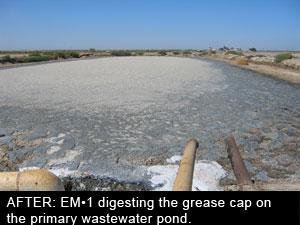
Extending the time between cleanouts of the trap and drains will save the restaurants several hundred dollars per cleanout. EM-1® will digest the majority of the grease and stabilize proteins (something no other product on the market can currently claim.) This will control odors and keep the trap from backing up.

Regular applications of Effective Microorganisms™ brand products (EM-1®) will keep the restaurant pest and grease free, leaving the restaurant owner with a secure feeling, knowing there will be no grease trap overflows or health department problems.

The Hood, Behind, and Underneath The Line:
There are a couple of easy ways to apply a solution of EM-1® to these areas during breakdown. One is to use a pump sprayer and spray in a fine mist each time you breakdown or cleaning. Another way is to use a spray bottle and spray the solution directly on the surface at the end of each shift. Within a short time, the grease will be eaten off the wall and you will only need to polish the surface. A Great Time Saver!

General Cleaning During Breakdown:
To increase the benefits of the EM-1® applications, it is recommended to use Effective Microorganisms™ (EM-1®) in place of any synthetic soaps, de-greasers, and cleaners. You can combine the two for added grease digestion. Simply mix them in your wash bucket during cleaning in equal amounts.
Using EM-1® during the nightly wash down (breakdown) on the line and the firewall behind is great for fire preventive. The EM-1® eats the grease on the walls, the stoves, and the hood and gets rid of the fire hazard by eating the grease.
  
Mopping The Floor (Tile, Stone, and Wood):
Add a combination of water and EM-1® to the mop bucket. You won't need any soap, bleach, or grease cutter any more. The floor will not have that haze of grease. This will be great because it will prevent the slick slipping hazard that is almost impossible to get rid of with normal cleaners.

Use a sprayer and spray a solution of water and EM-1® onto the carpet after each dining time. Since carpets harbor odors, this will help to stop the odor, build up of grease, and stop matting of the carpet fibers. This will leave the room smelling and looking fresh every day. When steam cleaning the carpets, add a cup of EM-1® for each full reservoir of water.

Odor (Smoke, Food, Grease, etc):
Regular use of EM-1® inside the restaurant will stop odors in the sewer or septic lines that hover around the manholes that your walk by on their way into your restaurant.

Spraying the dining area (the front of the house) with a mixture of Effective Microorganisms™ (EM-1®) and water will keep grease down on the carpeted areas and eat any odors from dirt, spilled alcohol, and smoke.

All the mats should be hosed down with a solution of EM-1® during normal cleaning as well. This will not only keep odors from coming out of the mats, but will also eat the grease on the makes, keeping them from being so slippery.

EM-1® can be put into an evaporative cooler or in Smoke-Eater® filters to get rid of the smells in the air. EM-1® in air conditioner and "swamp cooler" keeps the components and filters clean and running efficiently. This can be done by using a simple siphon unit connected to a container of EM-1®.

Cleaning the bathrooms with an Effective Microorganisms™ (EM-1®) solution will get rid of all smells of urine and drain back gassing.

Pest Control
Spraying the shed areas, mats, and in the fry-o-lator drums will prevent odor, which attracts flies. Similarly, EM-1® will prevent putrefaction, which, in turn, eliminates the food source for ants, roaches, rats, and mice. These pests leave scent trails through access points (crawl spaces, utility access both overhead and below and through walls) to return upon and for other pests to follow. Periodically cleaning these areas with EM-1® will eliminate the insect's scent trails. Reduction in insect and rodent populations will also decrease problems from birds and other predators in dumpsters.


Tuesday, December 20, 2011

How to make EM FPE (Fermented Plant Extract)

EM FPE is made from fresh weeds and plants with EM. Therefore, EMFPE contains organic acids, bioactive substances, minerals and other useful organic compounds which are produced or extracted from plants through fermentation process. 
EM FPE is mainly used as a plant activator. In the case one puts the weeds, which have strong smell and substance, such as neem leaf to prevent the disease and insects. One expects FPE as organic pesticides.

Material For 20L
Fresh weeds(chopped) 14 liters(2-3kg)
Clean water 14 liters
Molasses 420ml(3% of water volume)
EM・1 420ml(3% of water volume)
Plastic drum or bucket 20L

Process of preparation
1. Chop freshly harvested weeds into small (2-5cm) pieces and place in container.
2. Mix EM and molasses in water and add to weeds in container.
3. Cover container with black polythene or vinyl.
4. Place lid of container on top of the block cover and place some weights on it.
Avoid having space between the liquid and cover (i.e. container must be full).
5. Store the container in a warm place. (Ideally 20℃ to 35℃), away from direct sunlight.
6. Fermentation is initiated and gas is generated within 2-5 days. This depends on the ambient temperatures.
7. Stir the liquid in container regularly to release gases.
8. EM FPE is ready to use, 7-14 days after preparing it. When the pH of the solution drops below 4.0(ideally it has a pH around 3.5) and when it has a sweet –sour smell. 
Pour the prepared EM FPE into plastic bottles after removing weeds by filteration.


Testimonies from Auroville International Township: 
(longitude 79 54’, latitude 12 North) is located in Villipuram district of Tamil Nadu on the Coromandel Coast of southern India. It is included in the subhumid tropics with arid tendencies. The area defined for the township is a plateau region with its maximum elevation of 32 mtr, located in the Matrimandir area. The land slopes away from this point to the coast and to heavier alluvial soils to the West. The annual rainfall average is 1.200 mm. mainly from the SW monsoon (June to September) and NE monsoon (November to December) with a dry period of approximately 6 months. The average maximum temperature is 37.2C and the average minimum temperature is 20C. 

FPE are used:
.- for all fungus problems.
.- EM + EM5 + neem oil against insects.
.- EM + EM5 + FPE for controlling all insects and diseases. 

Pest Management with EM5 and FPE:
.- Black sigatoka in bananas is controlled.
.- Eriophyd mite in coconuts is controlled.
.- Rhinoceros beetle in coconuts is controlled.
.- Tea mosquito bugs, nut borers, leaf miners, webber, leaf folders and 
     flower thrips in cashews are controlled.
.- Caterpillars and bugs in vegetables are controlled.
.- With cow urine included the fungus attack in guavas is eliminated.
.- With a preparation of fish meal and EM, fungus in mangoes is controlled
.- In tomatoes and brinjal, bacteria wilt is controlled.
.- In orchids, virus-bacteria and fungus are controlled.
.- The most dramatic results were in citrus species affected by 
     Gummosis (Diplodia natalensis);used together with copper sulfate, 
     all of them recovered from very bad damage.
.- Fruit trees affected by Phytophthora nicotianae and Anthracnose 
     (Colletotrichum gloeosporioides), (two of the most virulant pathogens) 
     are controlled.
.- During monsoon, fungus attack on human feet is eradicated.

E.M. treatment against Gummosis (Diplodia natalensis), one of the most dangerous fungi in the
world specific to citrus trees.

Coconut tree with pest before E.M. treatment


Healthy coconut tree, after treatment.